Utilize the invoice payment gateway for checkout – order now, pay later. With a Coinsteam business account, you gain access to priority support, increased order limits, and competitive pricing for bulk orders available through quote requests.
Invoice Gateway : Upon placing your order, we will issue an order invoice followed by an invoice payment request, featuring a convenient payment gateway. Choose from flexible payment options including PayPal, Venmo, Apple Pay®, credit cards, debit cards, or ACH bank transfers.
Thank you for being a valued customer. We're looking forward to build steam for your projects.
Despite the Biden administration’s rigorous efforts to halt the technological empowerment of China through export bans on NVIDIA’s AI chips, recent developments underscore a disconcerting paradox in the geopolitical tech saga. Chinese researchers and entities, in a defiant act of circumvention, have continued to leverage the high-end H100 AI chips from NVIDIA, revealing not just a loophole, but an abyss in the U.S. export control.
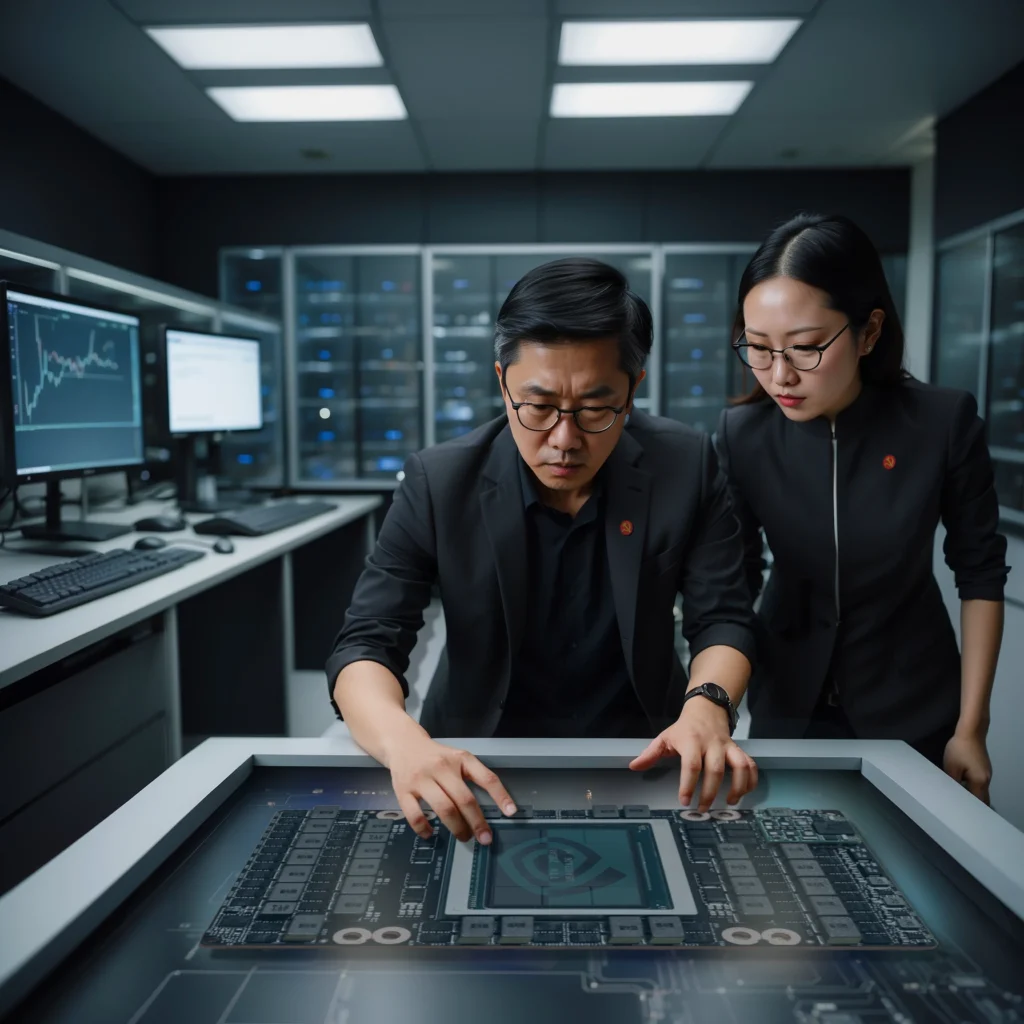
Recent reports reveal that despite the U.S. government’s efforts to block the transfer of critical AI technology to China, Chinese researchers and companies have managed to obtain NVIDIA’s H100 AI GPUs. These chips, pivotal in AI research and development, have appeared in academic studies and projects linked to Chinese national science institutes and companies blacklisted by the U.S. This situation underscores a significant loophole in the enforcement of export controls, with suspicions pointing towards indirect acquisitions through compliant nations as per a Reuters review, or a burgeoning black market.
The ‘Five Eyes’ intelligence collective sounded the alarm that China’s expansive campaign in pocketing intellectual property, spanning across critical sectors like biotech, aerospace, and AI, is threatening not only the economic but also the national security fabrics of Western nations. FBI Director Christopher Wray’s characterization of China as the “defining threat of this generation” accentuates the unprecedented magnitude of this plundering, impacting jobs and livelihoods far beyond Wall Street.
While the U.S. strives to barricade its technological fortress, the ease with which Chinese entities access these advanced chips calls into question the robustness of enforcement mechanisms. The scenario not only necessitates a stringent reevaluation of export controls but also beckons a dire need for holding violators accountable. Punitive measures and sanctions must be more than just symbolic; they should be potent enough to deter the systematic technology transfer aiding China’s military-civil fusion strategy.
NVIDIA, the titan in the AI chip market, finds itself in an ethical dilemma, with its products somehow reaching the hands of Chinese entities despite strict export bans. This situation ignites debates on the accountability of U.S. corporations in the global technology transfer ecosystem.
The recent papers published to arxiv.org utilizing NVIDIA AI chips demonstrate the evolving landscape of international relations and technology warfare. The U.S. must lead in crafting and enforcing rules that ensure technological supremacy does not fall into the hands of adversarial powers.


Trending now