Utilize the invoice payment gateway for checkout – order now, pay later. With a Coinsteam business account, you gain access to priority support, increased order limits, and competitive pricing for bulk orders available through quote requests.
Invoice Gateway : Upon placing your order, we will issue an order invoice followed by an invoice payment request, featuring a convenient payment gateway. Choose from flexible payment options including PayPal, Venmo, Apple Pay®, credit cards, debit cards, or ACH bank transfers.
Thank you for being a valued customer. We're looking forward to build steam for your projects.
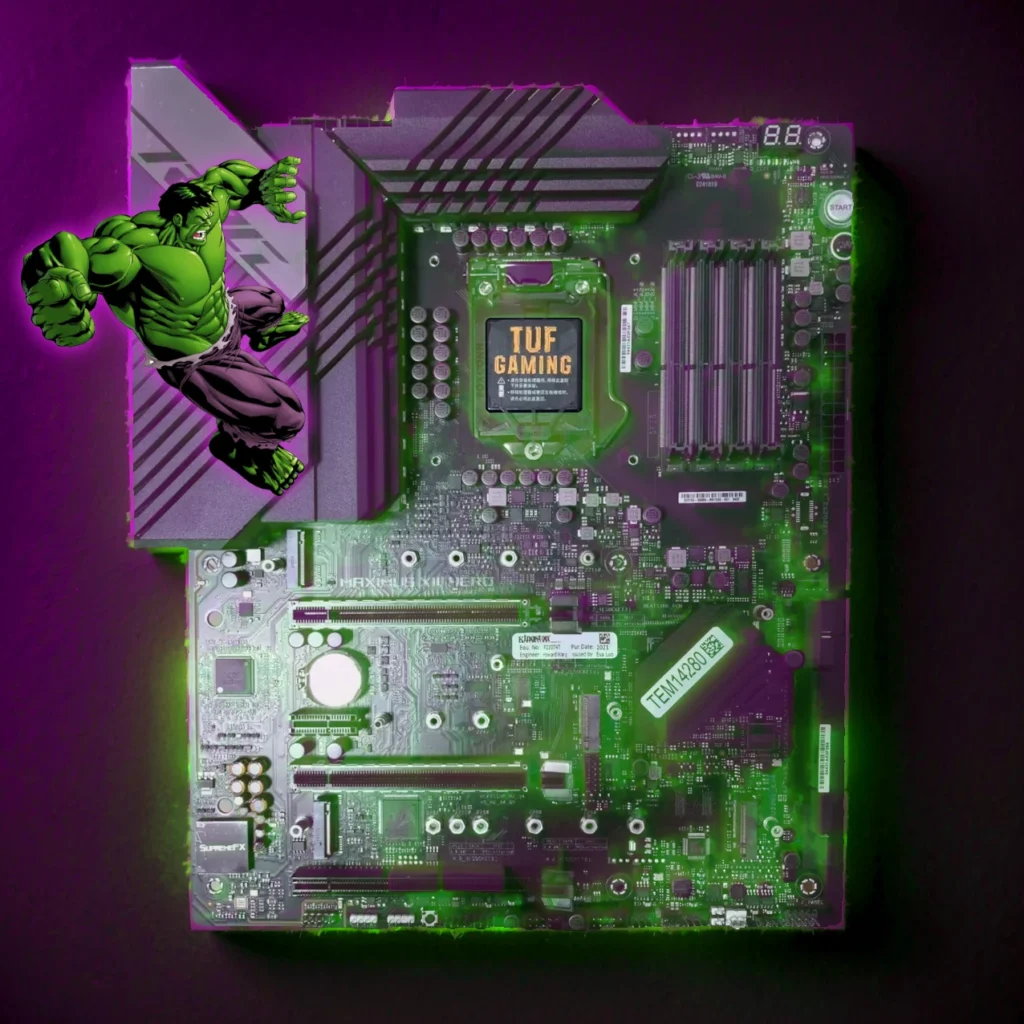
In a surprising discovery, hardware enthusiast wxnod has stumbled upon a rare and intriguing find: a modified ASUS Maximus XIII Hero motherboard that has been adapted to use SODIMM memory modules instead of the standard DIMMs. This unusual piece of hardware is likely an engineering sample used for testing and validation purposes, making it a true gem in the world of PC components.
The motherboard, which supports Intel’s 10th and 11th Gen CPUs, looks almost identical to the retail version, but with a few notable differences. The four DDR4 memory slots have been replaced by four SODIMM slots, and the fancy heatsink covering the PCIe 4.0 M.2 slots and Z590 chipset has been swapped out for a more basic one. Interestingly, the board also features a Kingston Fury logo instead of the usual ASUS logo during the boot process.
It’s believed that this particular Maximus XIII Hero was custom-made by ASUS for Kingston to conduct internal testing on their SODIMM products. The presence of a sticker bearing the names of Kingston engineers Howard Wang and Eva Luo next to the primary PCIe 4.0 x16 expansion slot supports this theory. The motherboard, produced in 2021, boots up without issue and runs on beta firmware dated April 20, 2022, further indicating its purpose as an internal testing platform.
While this modified motherboard was likely never meant to leave the confines of ASUS or Kingston labs, its emergence on the Chinese black market for PC hardware raises intriguing questions about what other rare and fascinating items might be lurking in the shadows. From engineering samples of unreleased processors to one-of-a-kind graphics cards, the possibilities are endless.
As exciting as this discovery is, it’s important to note that the Maximus XIII Hero and the LGA1200 platform it supports are now a part of history, having been superseded by Intel’s 12th Gen Alder Lake processors. Nevertheless, the allure of stumbling upon such a unique piece of hardware is undeniable, and it serves as a reminder of the ever-evolving nature of PC components.
This rare find also highlights the ongoing challenges faced by laptop RAM, as the SODIMM standard approaches its 25th anniversary and faces an impending speed wall. With laptop manufacturers increasingly opting for soldered LPDDR RAM or integrating it into mobile SoCs, upgradability has become a concern. However, companies like Micron and Samsung are working on alternatives, such as LPCAMM2 RAM modules using LPDDR5X, which could potentially revolutionize laptop memory in the near future.
As we ponder the mysteries of the Chinese black market and the exciting developments in laptop RAM, it’s clear that the world of PC hardware is always full of surprises. Who knows what other rare and intriguing finds might be waiting to be discovered, and what new technologies will shape the future of computing?



Trending now