Utilize the invoice payment gateway for checkout – order now, pay later. With a Coinsteam business account, you gain access to priority support, increased order limits, and competitive pricing for bulk orders available through quote requests.
Invoice Gateway : Upon placing your order, we will issue an order invoice followed by an invoice payment request, featuring a convenient payment gateway. Choose from flexible payment options including PayPal, Venmo, Apple Pay®, credit cards, debit cards, or ACH bank transfers.
Thank you for being a valued customer. We're looking forward to build steam for your projects.
In the realm of tech enthusiasts and modders, individuals like Paulo Gnomes stand out for their innovative work on graphics hardware. Gnomes transformed an AMD RX 5600 XT, initially equipped with 6GB of RAM and a 192-bit memory bus, into a powerhouse with 16GB of RAM and a 256-bit bus, boosting its performance by about 29%. His work shows the hidden potential within consumer-grade GPUs, revealing how they can be modified to rival more expensive counterparts.
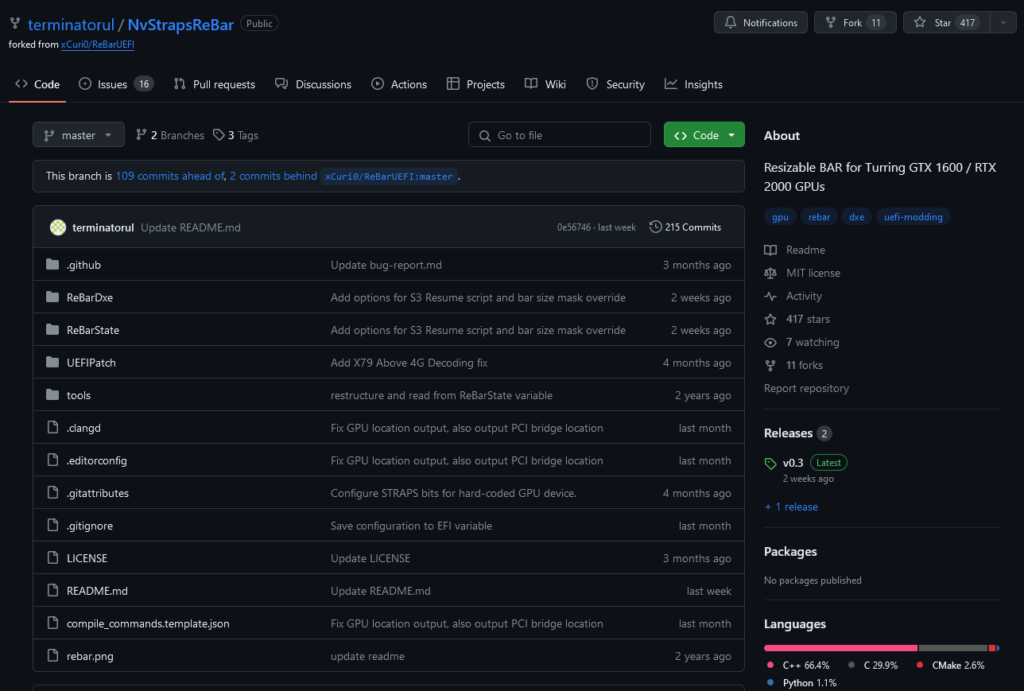
Another mod that caught attention in the tech community was the NvStrapsReBar for Nvidia’s RTX 20-series and GTX 16-series GPUs. This software mod added Resizable Bar (ReBAR) support, a feature not initially available for these older models. It involved modifying the motherboard’s UEFI, rather than the GPU’s vBIOS, showcasing another level of innovative hardware manipulation.
Gnomes’s, Terminatorul’s or VIK-on’s work demonstrate a broader community trend where users seek greater control and efficiency from their existing hardware. This desire for empowerment and customization in the tech community often clashes with the business strategies of major manufacturers like Nvidia.
It seems the company has made decisions that push consumers towards more expensive, server-grade products. The discontinuation of NVLink in consumer-grade cards and its replacement with PCIe Gen 5 in newer models suggest a strategic move. This is done to segment the market more distinctly. The speculation is that Nvidia aims to maximize profits by driving users who require high-performance computing, such as in AI training, towards their more costly products like the H100.
Nvidia’s CEO Jensen Huang stated that the removal of NVLink was necessary to accommodate more AI processing capabilities in their GPUs, emphasizing the shift towards maximizing the computational power and efficiency of their products, particularly for AI applications. Despite these reasons, skepticism remains within the tech community. Some believe that eliminating NVLink, which facilitated efficient multi-GPU setups, is a tactical decision by Nvidia. This skepticism stems from the perception that Nvidia aims to limit the ability of consumers to harness the collective power of multiple GPUs.
Nvidia’s approach to product segmentation and market control is further illustrated in their End User License Agreement. The EULA states: “The SOFTWARE is not licensed for datacenter deployment, except that blockchain processing in a datacenter is permitted.” This clause in Nvidia’s EULA underscores their intention to limit the use of consumer-grade GPUs. Such policies show Nvidia’s efforts to tightly control how their products are used and to protect their high-margin segments, especially in server and AI-focused markets.
Contrasting with Nvidia’s restrictive practices, AMD appears to embrace a more consumer-friendly approach. When the AI startup Tiny Corp faced challenges with their Radeon RX 7900 XTX-based server system, AMD’s CEO Lisa Su accepted to to offer support. This engagement demonstrates AMD’s commitment to supporting innovation and practical problem-solving, even for those using consumer-grade hardware in enterprise scenarios.
Thanks for the collaboration and feedback. We are all in to get you a good solution. Team is on it.
The narrative unfolding in the tech industry around GPU usage and modifications paints a complex picture of innovation, control, and market dynamics. Modders like Paulo Gnomes or startups like The Tiny Corp push the boundaries of what’s technically possible with existing hardware. Meanwhile, companies like Nvidia and AMD take divergent paths in how they manage their technological ecosystems and interact with their user bases. Nvidia’s strategic positioning and policy enforcement suggest a focus on maintaining control and profit maximization. AMD’s more open and supportive stance points to a different ethos, prioritizing accessibility and user empowerment.


Trending now